Planning an event in the UK involves far more than organising logistics, entertainment and ticketing. One of the most important responsibilities for any organiser is ensuring the safety and well-being of attendees, staff and participants. A key part of this is ensuring the appropriate level of medical cover is in place.
The type of medical cover required will vary depending on the nature of the event, but the expectation across UK guidance is clear.
Event organisers must carry out a suitable risk assessment and ensure that appropriate medical provision is in place to respond effectively to any incidents that may occur.
Is Medical Cover a Legal Requirement for Events?
There is no single piece of legislation that prescribes the exact level of medical cover required for every event. However, UK health and safety laws place a clear duty of care on organisers to protect those attending or working at an event.
This means organisers must assess potential risks, implement suitable control measures, and ensure adequate first aid and medical support are available. Medical cover is therefore not optional; it is a fundamental part of responsible event planning.
In practice, this means that failing to provide appropriate medical cover could expose organisers to legal risks, particularly if an incident occurs and it is found that provision was insufficient.
The Starting Point: Risk Assessment
Determining the correct level of medical cover always begins with a thorough risk assessment. This process allows organisers to identify potential hazards and understand the level of medical support that may be required.
Several key factors influence this assessment. The size and scale of the event will have a direct impact, as larger crowds typically increase the likelihood of incidents. The type of event is also important, with higher-risk environments such as sporting events or festivals requiring more advanced provision than smaller community gatherings.
Audience demographics must also be considered, including age, health vulnerabilities and whether alcohol is involved. Location plays a role too, particularly in terms of accessibility for emergency services and proximity to hospitals. Duration, time of day and environmental conditions can all influence the level of risk.
By carefully assessing these elements, organisers can develop a clear picture of the medical resources required and ensure the event is planned safely from the outset.
What Level of Medical Cover Might You Need?
The level of medical cover required will vary significantly depending on the event’s risk profile.
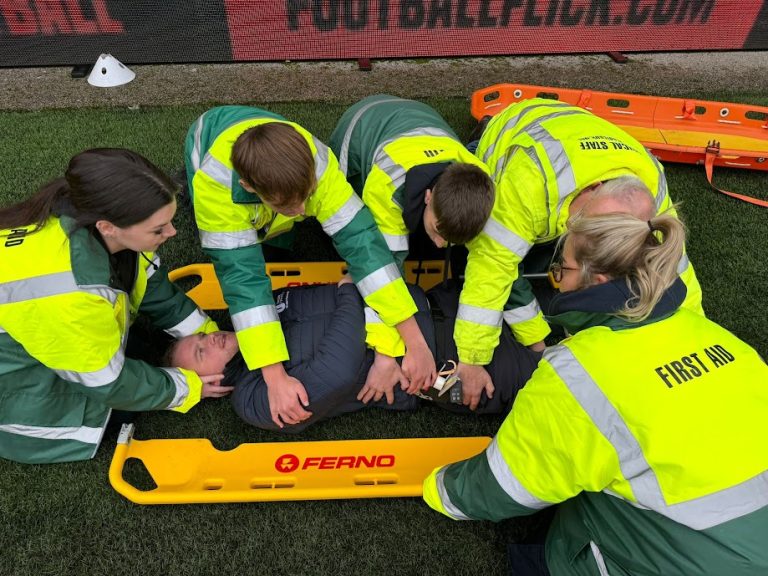
For smaller, low-risk events, basic first aid provision may be sufficient. This typically involves trained first aiders who can deal with minor injuries and provide immediate care when needed. Even at this level, first aid provision must be clearly visible and accessible to attendees.
As events increase in size or complexity, enhanced medical cover becomes necessary. This may involve a combination of first aiders and trained medical responders, along with designated treatment areas where patients can be assessed and managed. Communication systems and coordination become increasingly important at this stage to ensure that incidents are handled efficiently.
For large-scale or higher-risk events, such as festivals, major sporting fixtures or public gatherings, full event medical services are required. This includes dedicated medical teams comprising paramedics, nurses and doctors, as well as on-site medical centres and ambulance provision. At this level, a detailed medical plan is essential to ensure that all potential scenarios are accounted for and that responses are coordinated effectively.
Key Components of Event Medical Cover
Regardless of the size of the event, several core elements underpin effective medical provision. A structured medical risk assessment should always be carried out, serving as the basis for a detailed medical plan outlining how care will be delivered.
Appropriately trained personnel are essential, with the level of qualification depending on the identified risks. This can range from first aiders through to advanced clinicians capable of delivering higher levels of care.
Equipment and facilities also play a critical role. This includes not only first aid kits and defibrillators, but also suitable treatment areas or medical centres where patients can be assessed and treated safely.
Finally, emergency service access must always be considered. Clear routes for ambulances and coordination with local emergency services are vital to ensure that patients can be transported quickly if required.
Compliance & Industry Guidance
Event organisers are expected to follow recognised guidance when planning medical cover. In the UK, the Purple Guide is widely regarded as the industry standard for event safety and provides detailed recommendations on medical provision.
Local authorities and Safety Advisory Groups (SAGs) may also provide specific guidance depending on the nature of the event. The Health and Safety Executive offers broader advice on managing risks and ensuring compliance.
In addition, there is increasing emphasis on clinical governance, particularly where more advanced medical care is being delivered. In some cases, providers may need to meet Care Quality Commission standards, reflecting the importance of maintaining high levels of professionalism and accountability.
Why Professional Medical Cover Matters
While basic first aid may be suitable for some events, many require a more comprehensive approach. Professional medical cover ensures that incidents are dealt with quickly and effectively, reducing the risk of complications and improving outcomes for those involved.
It also helps to reduce pressure on NHS services by managing incidents on-site where appropriate. From a compliance perspective, it demonstrates that organisers have taken their responsibilities seriously and have put appropriate measures in place to protect attendees.
Perhaps most importantly, it provides peace of mind. Knowing that experienced professionals are in place allows organisers to focus on delivering their event, confident that medical support is available if needed.
Looking For Medical Event Cover? Speak To Medics UK
There is no one-size-fits-all approach to event medical cover in the UK. The appropriate level of provision depends entirely on the specific risks associated with each event.
However, the principle remains the same. The higher the risk, the greater the level of medical support required.
By carrying out a thorough risk assessment, following recognised guidance and working with a professional medical provider, organisers can ensure their event is safe, compliant and well-managed.